Planning Poker
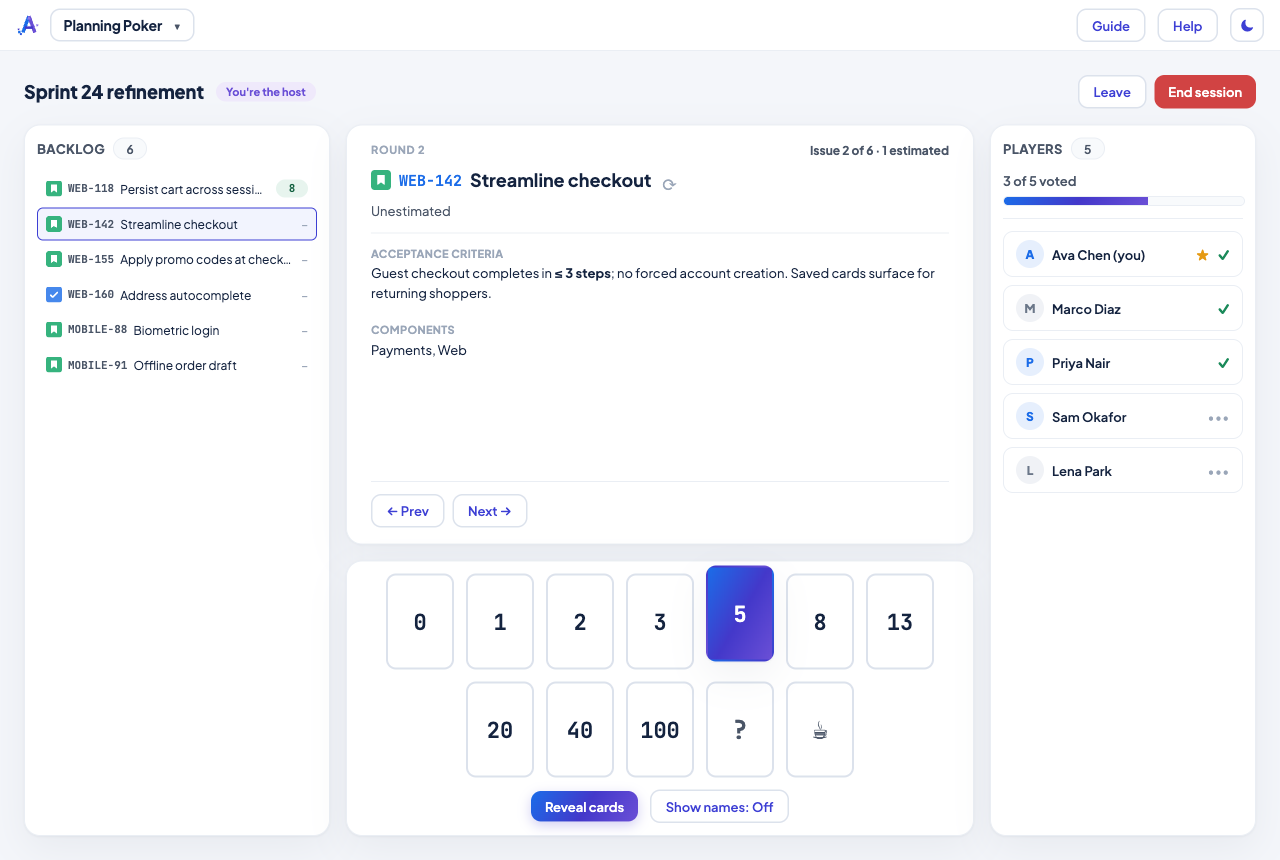
Anonymous, real-time story estimation — right where the work lives. Everyone votes privately, the cards flip together, and the agreed value writes straight back to Jira. Any number of teams can run their own sessions at once, and there are no accounts to set up.
Highlights
- Estimate what you like — pick a deck (Fibonacci, powers of two, or T-shirt sizes) and point at a project backlog, a saved filter, or JQL. Those issues become an ordered queue you walk one at a time.
- Truly anonymous — no one sees anyone's vote until the reveal, not even the facilitator, and everyone's cards flip at the same moment.
- Context that stays fresh — show read-only Jira fields (Description, Acceptance Criteria…) on each card; if someone edits the issue in Jira, the change appears here within seconds.
- One-click write-back — once you agree, save the value to Story Points (or any field) as you, respecting your Jira permissions. It finds the right field automatically.
- Shared timer & join links — the facilitator can run a shared countdown at the top of the People list (a preset or a custom time, with a chime when it's up), and a Join link drops any teammate straight into the session.
Reveal, then apply
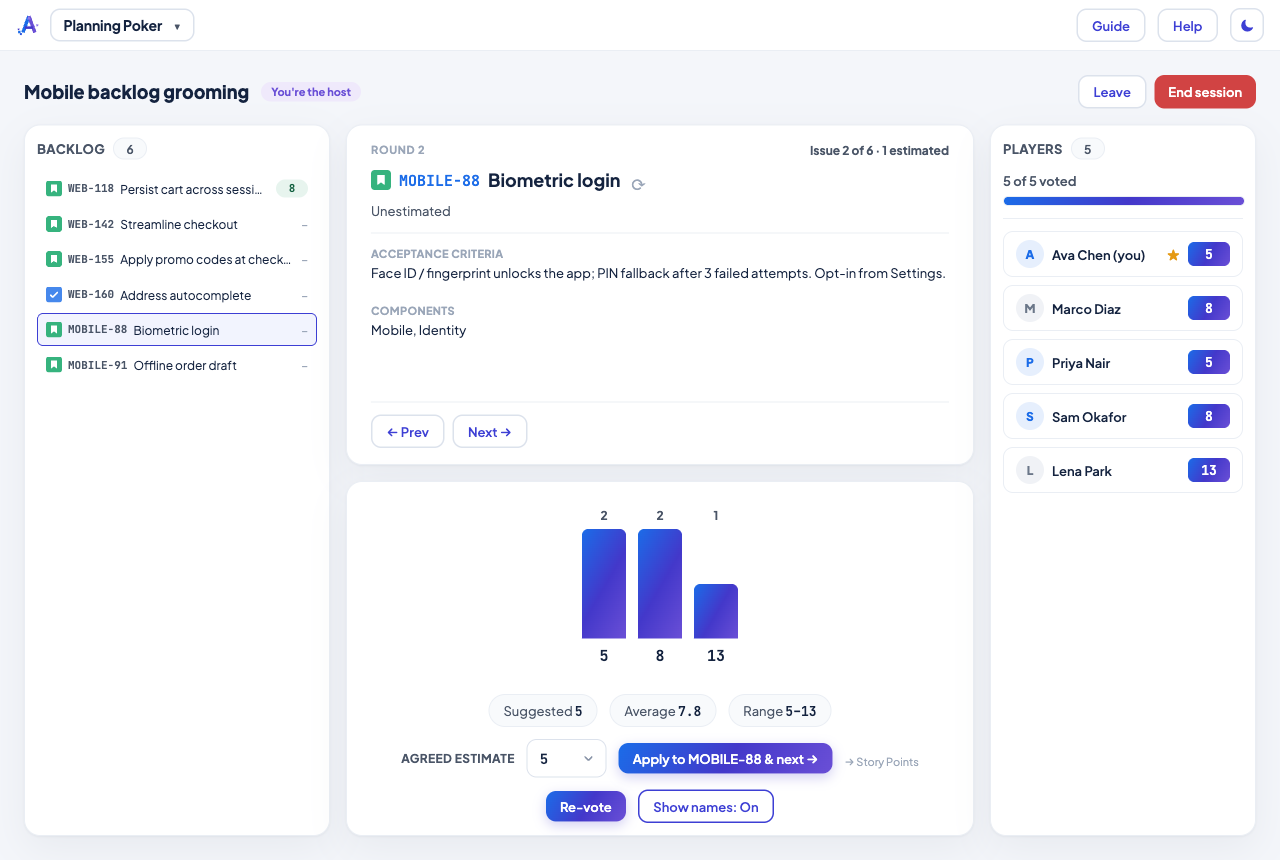
Every session that estimated something is kept for 90 days in a sortable, filterable History, so you can revisit what a team decided and when.
Read the full how-to in the Knowledge Base → Planning Poker guide
Related: Capacity Planning · Backlog Refinement